On this page
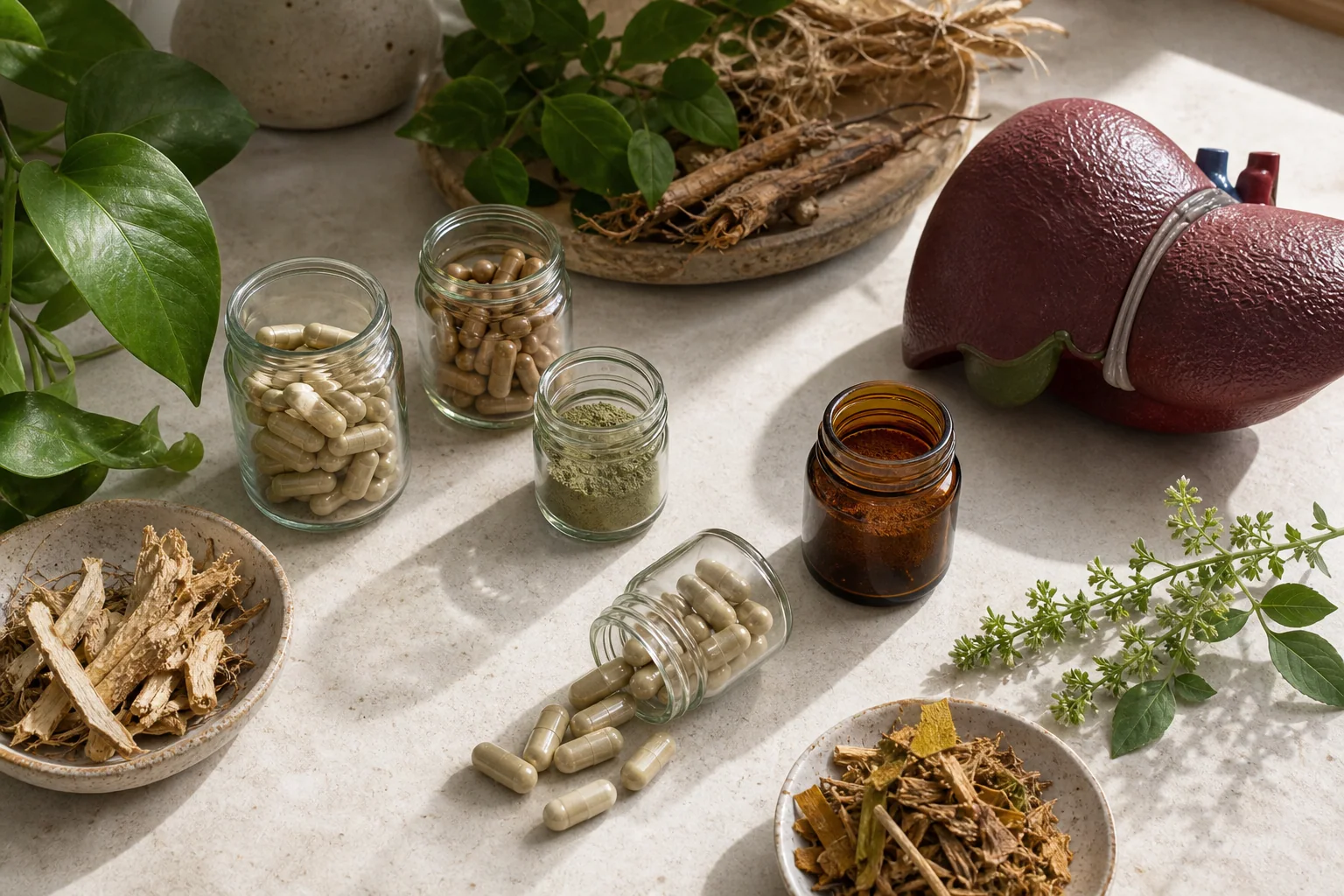
A product described as natural is not necessarily harmless. Herbal preparations, concentrated extracts, weight-loss supplements and sports products can inflame the liver. Most people use them without difficulty, but some develop a severe and unpredictable injury.
Diagnosis can be difficult because there is no single test that identifies the responsible supplement. The most useful information is a complete list of everything taken during the previous months, including the dates each product was started and stopped.
Which products have been linked to liver injury?
Reports involve many different products. Groups that deserve particular caution include:
- Weight-loss or “fat-burning” mixtures.
- Muscle-building supplements, some of which contain undeclared anabolic steroids.
- Concentrated green tea extract, especially in high doses and while fasting.
- Traditional medicine products containing multiple herbs.
- High doses of vitamin A or niacin.
- Preparations that do not clearly disclose all ingredients.
Risk is not identical across every brand or dose. Composition may vary between batches, and a label does not always reflect what is actually in the bottle.
What symptoms can occur?
The injury may resemble viral hepatitis or obstruction of bile flow. Seek advice if you develop the following after starting a supplement:
- Marked fatigue, nausea or loss of appetite.
- Jaundice, with yellow skin or eyes.
- Dark urine.
- Widespread itching.
- Pain in the upper right abdomen.
Some people have no symptoms, and the problem appears only as elevated liver enzymes. In rare cases, acute liver failure can occur.
How is it diagnosed?
The clinician reviews when each product was started, the pattern of blood test abnormalities and what happens after the product is stopped. Other causes must also be excluded, including hepatitis A, hepatitis B, hepatitis C, autoimmune disease and bile duct obstruction.
Bring containers or photographs of labels to the appointment. Include products you may not consider “medicines,” such as teas, powders, drops, vitamins, compounded preparations and supplements purchased online.
What should I do if I suspect a supplement?
Stop the suspected product and seek medical advice, especially if you have jaundice, vomiting or marked weakness. Do not restart it to “test” whether it was the cause. A second exposure can trigger a faster and more severe reaction.
There is no general antidote for this type of injury. Treatment consists of removing the product, monitoring blood tests and treating complications. Most people recover, but normalization may take weeks or months.
Do liver detox products work?
No supplement can reliably “cleanse” the liver or neutralize injury from other products. Adding new herbs while liver enzymes are elevated can confuse the diagnosis and increase risk.
Before taking a supplement, ask whether there is a genuine indication, whether it interacts with your medications and whether its composition and quality control are reliable. This is especially important if you already have cirrhosis, chronic hepatitis, are pregnant or are awaiting transplantation.
See also
- Elevated liver enzymes
- Acetaminophen liver toxicity
- Mushroom poisoning and the liver
- Nutrition and the liver
References
- Fontana RJ, Liou I, Reuben A, et al. AASLD practice guidance on drug, herbal, and dietary supplement-induced liver injury. Hepatology. 2023;77(3):1036-1065.
- Bessone F, García-Cortés M, Medina-Caliz I, et al. Herbal and Dietary Supplements-Induced Liver Injury in Latin America: Experience From the LATINDILI Network. Clin Gastroenterol Hepatol. 2022;20(3):e548-e563.
- Navarro VJ, Barnhart H, Bonkovsky HL, et al. Liver injury from herbals and dietary supplements in the U.S. Drug-Induced Liver Injury Network. Hepatology. 2014;60(4):1399-1408.
Related articles
Hepatotoxic mushroom poisoning (Amanita phalloides)
Eating wild Amanita mushrooms can cause acute liver failure from amatoxins. Clinical phases, treatment and why it is a medical emergency.
Acetaminophen (paracetamol) liver toxicity
Acetaminophen poisoning is a common cause of acute liver failure. Learn the toxic dose, why timing matters, and why N-acetylcysteine saves lives.
The myth of the daily glass of wine: is moderate drinking good for you?
A daily glass of wine is not a healthy habit. Current evidence shows there is no risk-free level of alcohol, either for the heart or for the liver.