On this page
- 1. What is fatty liver?
- 2. Is fatty liver serious?
- 3. What are the symptoms?
- 4. Why does it happen?
- 5. Is it hereditary?
- 6. Can fatty liver be cured?
- 7. What diet should I follow?
- 8. Does exercise help?
- 9. Can I drink alcohol?
- 10. Do I need a biopsy?
- 11. What medications are available?
- 12. How is severity graded and what follow-up do I need?
- See also
If you have been told you have fatty liver, you probably have many questions. It is the most common liver disease, in most people it is harmless, and it responds very well to changes in daily habits. These are the questions patients ask most often in the clinic, answered directly.
1. What is fatty liver?
Fatty liver is the buildup of fat inside liver cells. In 2023 the international nomenclature changed: what used to be called “non-alcoholic fatty liver disease” (NAFLD) is now known as metabolic dysfunction-associated steatotic liver disease, abbreviated MASLD. The new name better describes the metabolic origin of the disease and drops terms that patients found confusing or stigmatizing. If your test results mention “hepatic steatosis,” “fatty liver” or “MASLD,” they all refer to the same thing.
2. Is fatty liver serious?
For most people, no. The majority of those with fatty liver will never develop liver disease with serious consequences. The risk is concentrated in a smaller group in which the fat is accompanied by inflammation and, over the years, can cause fibrosis (scarring) and cirrhosis. That is why what matters is not so much having fat, but knowing whether there is fibrosis. It is also worth remembering that the leading cause of death in people with fatty liver is not the liver but cardiovascular disease, so taking care of your heart is part of the treatment.
3. What are the symptoms?
Usually none. Fatty liver is typically found by chance, on an ultrasound ordered for another reason or through mildly elevated liver enzymes on a blood test. Some people notice mild discomfort on the right side of the abdomen. Symptoms of advanced liver disease, such as jaundice or abdominal swelling, appear only once cirrhosis is present and are the exception.
4. Why does it happen?
Fatty liver is closely tied to how the body handles sugar and fat. The central mechanism is insulin resistance, which promotes the deposit of fat in the liver. That is why it often appears alongside overweight or obesity (especially abdominal fat), type 2 diabetes or prediabetes, high cholesterol or triglycerides, and high blood pressure. It can also occur in lean people, so the absence of these factors does not rule out the diagnosis.
5. Is it hereditary?
It is not a hereditary disease in the strict sense, but there is some genetic predisposition to accumulate fat in the liver, and families tend to share eating and activity habits that favor its appearance. Having a relative with fatty liver does not mean you will develop it, nor that you cannot reverse it with changes in daily habits.
6. Can fatty liver be cured?
In many cases, yes. One of the most important features of fatty liver is that it is reversible. Losing weight, improving your diet and increasing physical activity can make the fat disappear from the liver and even improve fibrosis when it is already present. A reduction of 7 to 10% of body weight produces clear benefits. It is not an overnight change, but it is achievable and sustainable.
7. What diet should I follow?
There is no single “fatty liver diet,” but there is a well-supported pattern. The basis is to reduce sugar, sugary drinks and refined flour (white bread, pasta, rice, excess potatoes), and to increase vegetables, legumes, fish, nuts and olive oil. The Mediterranean diet has the strongest evidence, because it improves the liver and protects the heart at the same time. You can find practical recommendations in nutrition and the liver.
8. Does exercise help?
A great deal. Physical activity is one of the most effective ways to reduce liver fat, even when weight drops only a little. The ideal is a combination of regular aerobic exercise (brisk walking, jogging, cycling or swimming, 3 to 4 times a week) with some strength training. It is best to start gradually and, if you have cardiovascular risk factors, to check with your doctor before beginning an intense plan.
9. Can I drink alcohol?
The advice is to avoid it. In a person with fatty liver, alcohol adds harm on top of the metabolic damage and can speed up progression toward fibrosis. When there is meaningful alcohol intake together with metabolic factors, this is called MetALD, an intermediate category defined in the new nomenclature. Stopping alcohol has an added benefit: it cuts calories and helps with weight loss.
10. Do I need a biopsy?
Most of the time, no. Today, fibrosis is largely assessed with non-invasive methods, such as the FIB-4 index (which combines age, liver enzymes and platelets) and elastography (for example FibroScan), which measures liver stiffness. A liver biopsy is reserved for cases where doubt persists or another liver disease is suspected.
11. What medications are available?
The foundation of treatment is still lifestyle, not a pill. That said, the drug landscape has advanced. For people with steatohepatitis (MASH, the form with inflammation) and significant fibrosis, in 2024 the United States approved resmetirom, the first specific medication, which in a phase 3 trial improved liver inflammation and fibrosis. Drugs for diabetes and obesity, such as GLP-1 agonists (semaglutide) and tirzepatide, also show promising results. These drugs should always be prescribed by your physician.
12. How is severity graded and what follow-up do I need?
Fatty liver is distinguished between the simple form (fat only) and MASH, when there is also inflammation and damage to liver cells. What defines the prognosis is the amount of fibrosis, estimated with FIB-4 and elastography. In practice, if you have fatty liver, follow-up focuses on three things: monitoring liver fibrosis, managing diabetes, cholesterol and blood pressure, and keeping up the lifestyle changes over time. With that, the great majority of people keep a healthy liver.
See also
References
- Rinella ME, et al. A multisociety Delphi consensus statement on new fatty liver disease nomenclature. J Hepatol. 2023;79(6):1542-1556.
- Rinella ME, et al. AASLD Practice Guidance on the clinical assessment and management of nonalcoholic fatty liver disease. Hepatology. 2023;77(5):1797-1835.
- EASL-EASD-EASO Clinical Practice Guidelines on the Management of Metabolic Dysfunction-Associated Steatotic Liver Disease (MASLD). Obes Facts. 2024;17(4):374-444.
- Harrison SA, et al. A Phase 3, Randomized, Controlled Trial of Resmetirom in NASH with Liver Fibrosis. N Engl J Med. 2024;390(6):497-509.
Related articles

Semaglutide and fatty liver: what we know
Semaglutide (Ozempic, Rybelsus) may improve MASH in selected patients, but it does not replace fibrosis assessment. Learn about its benefits, limitations and risks.
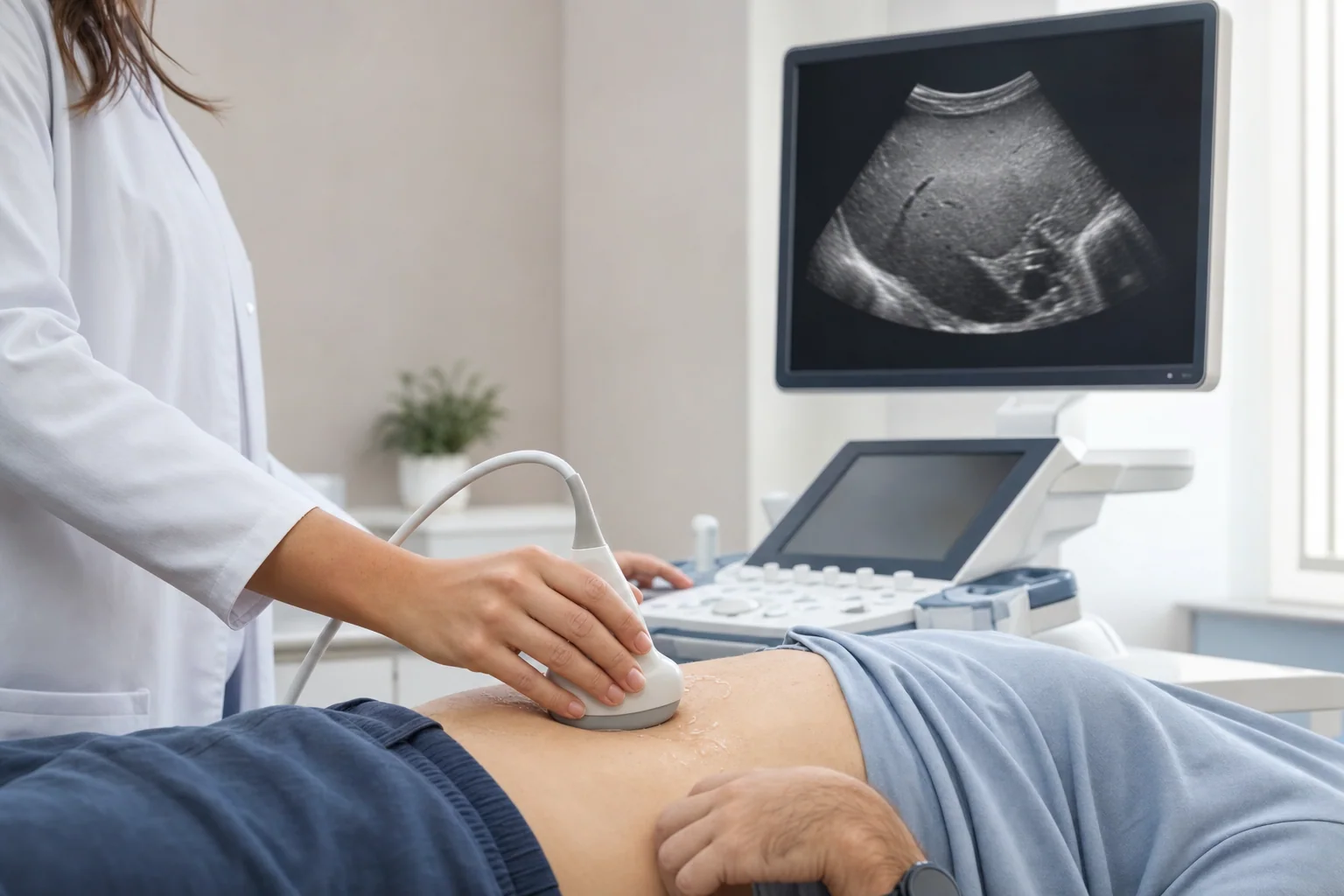
Fatty liver on ultrasound: what it means and what to do
Fatty liver on ultrasound is common and usually treatable. Learn which tests you may need and how doctors assess the risk of liver fibrosis.
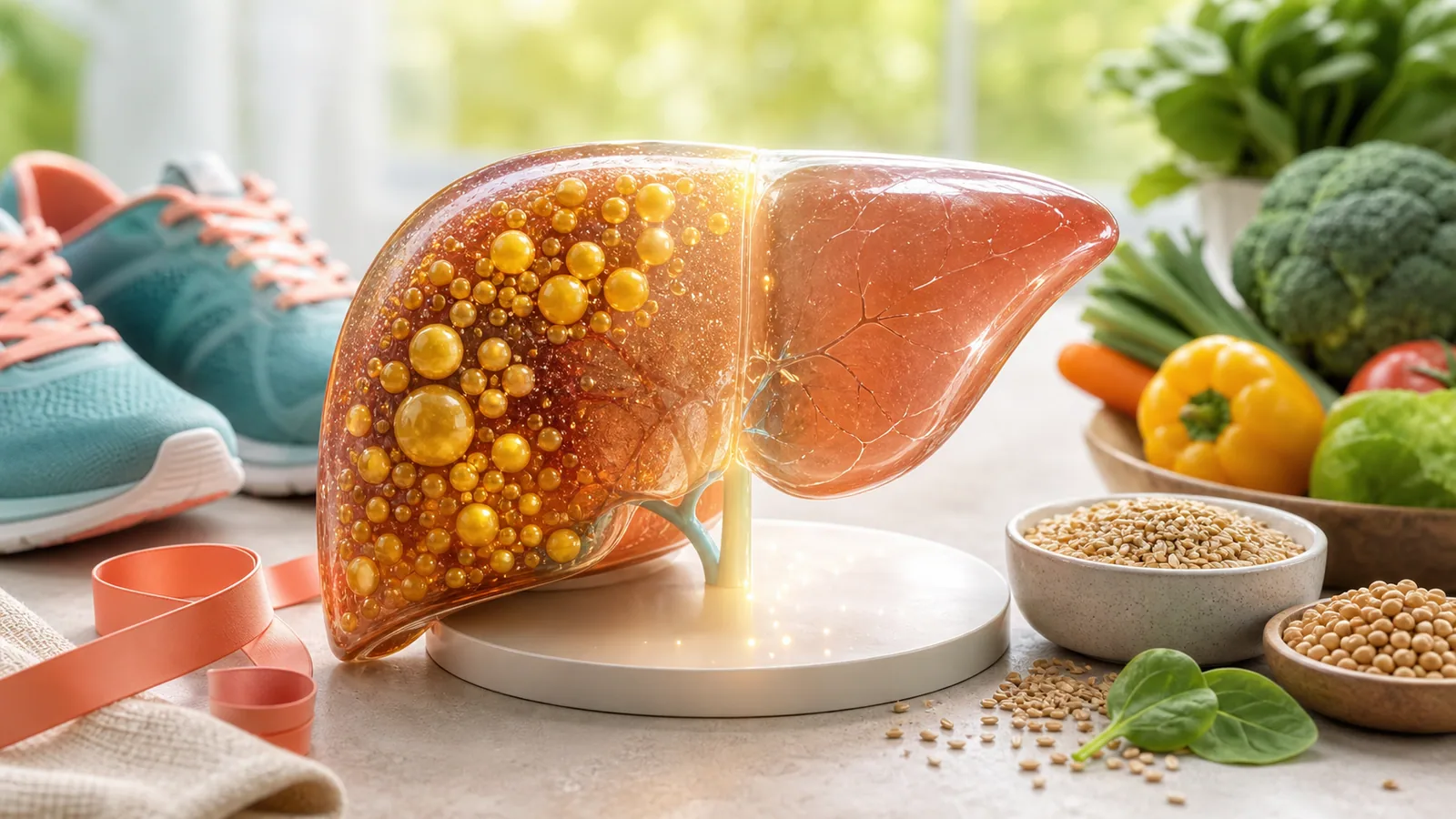
Fatty liver disease (MASLD)
Fatty liver, now called metabolic dysfunction-associated steatotic liver disease (MASLD), is the most common liver disease. What it is, how it is diagnosed and how it is treated.