On this page
Compensated cirrhosis means that the liver has advanced scarring but can still perform its functions and has not caused complications such as ascites, bleeding from varices or encephalopathy. Many people feel well and remain stable for years.
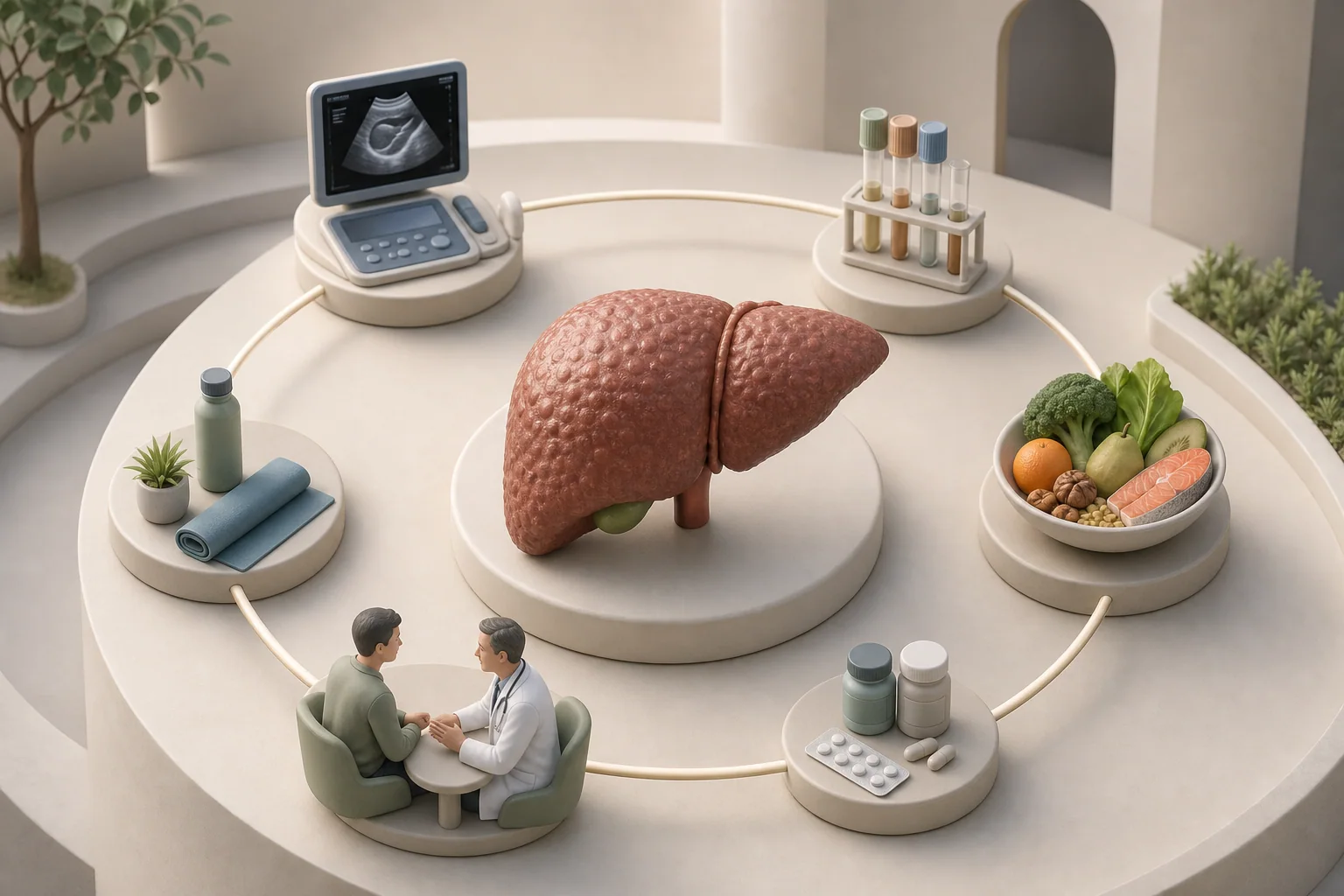
Feeling well does not remove the need for follow-up. Care aims to treat the cause, prevent the first decompensation and detect liver cancer early, while it may still be curable.
Treating the cause comes first
Stopping the source of liver injury has the greatest effect on prognosis. This may mean curing hepatitis C, controlling hepatitis B, avoiding alcohol completely, losing weight with fatty liver disease or treating an autoimmune condition.
Even if fibrosis measurements improve, a previous diagnosis of cirrhosis should not be removed from the medical history without specialist assessment. Some risks persist and require surveillance.
Ultrasound every six months
Every person with cirrhosis should undergo surveillance for hepatocellular carcinoma with an abdominal ultrasound every six months. An alpha-fetoprotein blood test is usually added. Annual ultrasound does not offer the same protection, and one normal CT scan does not replace future surveillance.
If ultrasound cannot show the liver adequately, because of obesity or anatomy for example, the clinician may recommend MRI or CT with an appropriate protocol.
Varices and portal hypertension
Cirrhosis can raise pressure in the portal vein before symptoms appear. Platelet count, elastography and, in some cases, upper endoscopy are used to estimate this risk.
Depending on the results, a nonselective beta blocker, such as carvedilol, may be prescribed to reduce the risk of decompensation or bleeding. Not everyone needs repeated endoscopies or the same treatment. Do not start or stop these medicines on your own.
Regular tests and appointments
Frequency is individualized, but follow-up generally includes:
- Complete blood count and platelets.
- Bilirubin, albumin, creatinine and sodium.
- Prothrombin time or INR.
- Assessment of weight, blood pressure, diabetes and nutrition.
- Review of medications, vaccines and alcohol use.
These results allow calculation of scores such as MELD and Child-Pugh when needed and can detect change before clear symptoms develop.
Food, exercise and medications
A low-protein diet is not recommended. Muscle loss is common in cirrhosis and worsens prognosis. Adequate protein, avoiding prolonged fasting and strength activity within your ability are useful.
Avoid anti-inflammatory medicines such as ibuprofen, diclofenac and naproxen unless your clinician specifically recommends them. Review herbal products and supplements as well. Influenza, COVID-19, pneumococcal, hepatitis A and hepatitis B vaccines are recommended according to age, history and immunity.
Signs of decompensation
Seek prompt care for increasing abdominal or leg swelling, jaundice, confusion, drowsiness, vomiting blood or black stools. A first episode of ascites, bleeding or encephalopathy changes management and may make liver transplant assessment necessary.
A simple, consistent schedule is more useful than intense but irregular monitoring. Bring previous results to each visit and record the date of your next ultrasound before leaving.
See also
References
- Kaplan DE, Ripoll C, Thiele M, et al. AASLD Practice Guidance on risk stratification and management of portal hypertension and varices in cirrhosis. Hepatology. 2024;79(5):1180-1211.
- de Franchis R, Bosch J, Garcia-Tsao G, et al. Baveno VII: Renewing consensus in portal hypertension. J Hepatol. 2022;76(4):959-974.
- Singal AG, Llovet JM, Yarchoan M, et al. AASLD Practice Guidance on prevention, diagnosis, and treatment of hepatocellular carcinoma. Hepatology. 2023;78(6):1922-1965.
Related articles
How to choose a good hepatologist in Chile
Verifiable criteria for choosing a hepatologist in Chile: professional registration, training, relevant experience, clinical network, communication and follow-up.
Causes of liver cirrhosis
The causes of cirrhosis, from the most to the least common, and why identifying and treating the cause early can stop and even reverse liver damage.
Hepatology: what it is and what a hepatologist does
Hepatology is the branch of medicine that studies the liver and bile ducts. What a hepatologist does and when you should see one.